

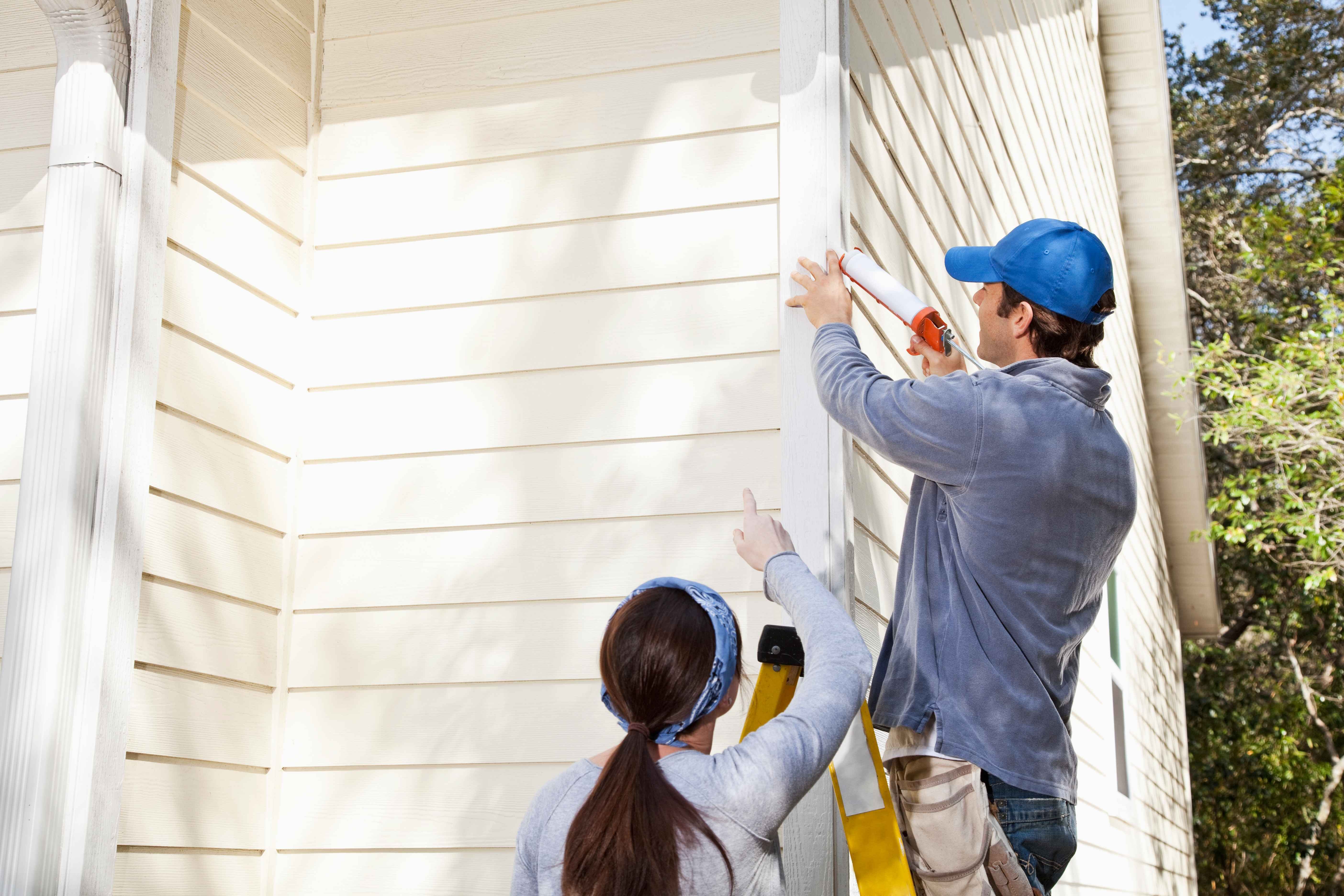
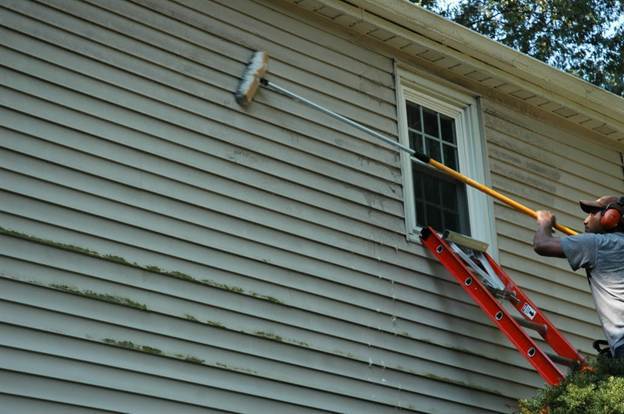
Siding is a long-term investment for your home but even premium siding materials can deteriorate when routine maintenance is overlooked.
Water stains, mold/mildew, fading color, loose panels, and small issues that turn into expensive repairs are all signs that your home's exterior may not be getting the maintenance it needs.
Addressing these issues early can help prevent more extensive damage and keep your exterior looking and performing its best.
The good news is that siding maintenance doesn’t have to be complicated. Regular inspections, gentle cleaning, proper landscaping, clean gutters, and prompt repairs can help prevent minor issues from becoming expensive siding repairs or replacement projects.
At Pacific Exteriors, we’ve helped homeowners protect their homes with professionally installed siding systems throughout the Pacific Northwest and Southeast for more than 15 years. Over that time, we’ve seen firsthand how neglected maintenance can contribute to siding failure, from moisture damage and deteriorating trim to problems that ultimately require siding replacement.
Understanding your siding needs can help extend its lifespan and protect your home’s structure underneath.
In this guide, we'll cover why siding maintenance matters, how to maintain it, which areas of your siding require extra attention, how maintenance varies by material, and when professional inspections may be necessary
Why Is Siding Maintenance Important?
The goal of siding maintenance isn't just intensive restoration or constant repairs. Instead, consistent upkeep helps homeowners identify and address small issues before they have the opportunity to become more serious.
Over time, exposure to everyday weather in your climate can gradually affect different parts of your home's exterior.
Consistent upkeep catches problems early, helps protect the components behind your siding, and can reduce the likelihood of costly repairs or premature replacement.
What Can Happen When Siding Maintenance Is Neglected?
Poorly maintained siding can contribute to several types of exterior damage, including:
|
Neglected Area |
Potential Consequences |
|
Moisture & Structure |
Wood rot, damaged sheathing, warped siding, and framing damage |
|
Mold, Mildew & Pests |
Persistent moisture can contribute to mold and mildew growth and may create conditions that increase the risk of wood-destroying insects |
|
Paint & Finishes |
Fading, peeling, cracking, and the loss of a durable, protective top layer |
|
Trim & Sealants |
Deteriorated caulking, flashing, and trim can create pathways for water entering behind the siding. |
|
Repairs & Replacement |
Minor issues can develop into extensive siding repairs or replacement |
How Often Should You Inspect Your Siding?
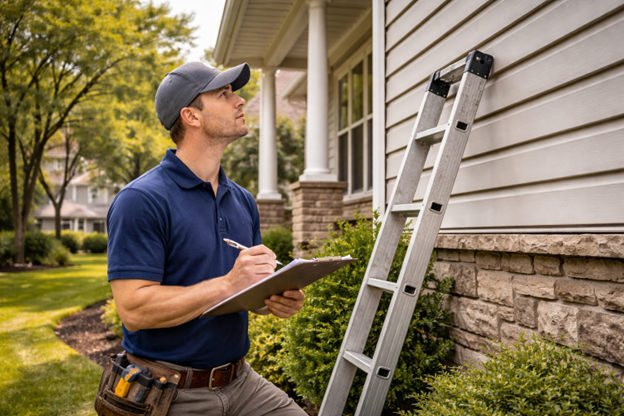
Homeowners should inspect their siding at least twice a year, ideally in the spring and fall when weather and temperature conditions are changing.
Spring: Check for damage that occurred during the winter or recent storms, including cracks, warping, loose panels, moisture stains, and vegetation contacting the siding. This is also a good time to clean the exterior and address minor issues.
Fall: Prepare for wetter and colder weather by checking siding, flashing, caulking, windows, doors, gutters, downspouts, and other potential water-entry points.
After severe weather: Inspect your siding after major storms for missing, loose, cracked, or dented panels.
If you're unsure how serious a problem is, have a professional siding contractor evaluate it before a minor issue becomes a larger repair.
Which Areas of Your Home Need the Most Siding Maintenance?
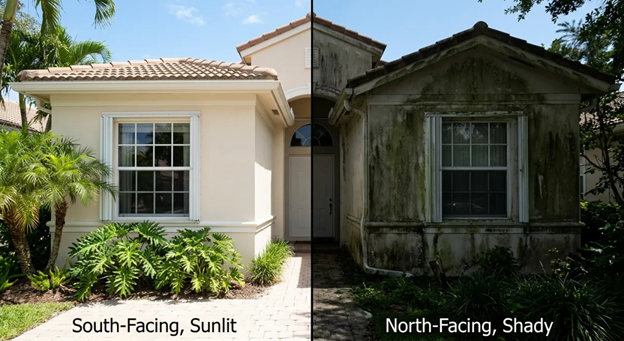
Some areas of a home's exterior are naturally more vulnerable to moisture and weather exposure.
|
Area to Inspect |
What to Look For |
Why It Matters |
|
Damaged or missing flashing |
Improper water runoff can soak the wall behind the siding |
|
|
Gutters & Downspouts |
Overflowing gutters, wet siding, clogged gutters, or downspouts letting out water too close to the exterior walls |
Repeated water exposure can contribute to siding and structural damage |
|
Windows, Doors & Trim |
Cracked caulking, gaps, deteriorated trim, or staining |
These transitions can create pathways for water intrusion |
|
Mold, mildew, algae, and areas that remain damp |
Limited sunlight can slow drying and increase moisture-related growth |
|
|
Fading, brittle siding, deteriorating paint, or failing caulking |
Greater sun exposure can accelerate UV-related deterioration |
|
|
Roof Valleys & Areas Below Gutters |
Recurring stains, discoloration, or isolated deterioration |
Water runoff may repeatedly saturate the same section of siding |
|
Shaded Areas & Vegetation |
Shrubs, vines, branches, trapped debris, or siding hidden by vegetation |
Reduced airflow slows drying and vegetation can conceal or cause damage |
As a general guideline, keep shrubs and other vegetation trimmed away from the siding to maintain airflow and prevent branches or leaves from contacting the exterior
How to Clean Your Siding Safely
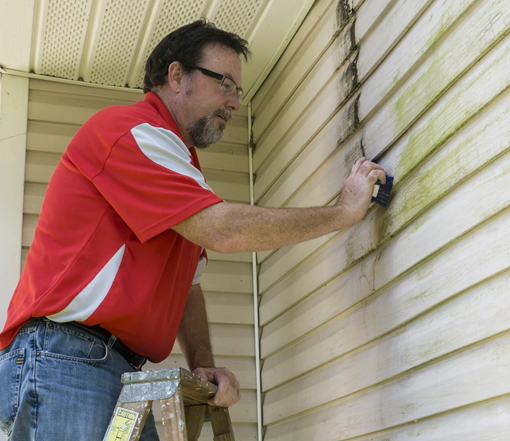
For all siding materials, gentle cleaning is the safest approach. Depending on your climate and surroundings, cleaning once or twice a year, or whenever your siding becomes visibly dirty can help maintain its appearance and finish.
Before Cleaning: Inspect for Any Damage
Inspect the siding for cracks, loose panels, damaged finishes, failed caulking, or other issues.
During Cleaning
Use a garden hose, mild soap (dish soap/vinegar mixed with water), and a soft brush, cloth, or sponge to gently remove dirt and build-up. Rinse thoroughly from the top down and always follow the siding manufacturer's specific maintenance instructions.
For cleaning mold and mildew, oxygen bleach is gentle and okay to use on siding. Avoid chlorine bleach since it’s more potent. Nonetheless, always check your siding manufacturer's cleaning instructions before using any bleach-based product.
* Avoid harsh acids, strong chemical cleaners, abrasive scrubbing, aggressive scraping, and excessive water pressure.
Avoid Pressure Washing
Pacific Exteriors generally does not recommend pressure washing siding. Excessive pressure can crack or loosen panels, damage paint and factory finishes, and force water behind the siding, potentially contributing to moisture intrusion.
Some manufacturers, including James Hardie, specifically advise against pressure washing their siding. Using cleaning methods that aren't approved by the manufacturer may also create warranty concerns and can potentially void it depending on their terms.
Seasonal Siding Maintenance Guide
.jpg?width=757&height=1070&name=Seasonal%20Siding%20Maintenance%20Checklist%20Chattanooga%20(2).jpg)
Siding Maintenance by Material
While all siding benefits from regular inspections and gentle cleaning, some materials require more frequent maintenance than others.
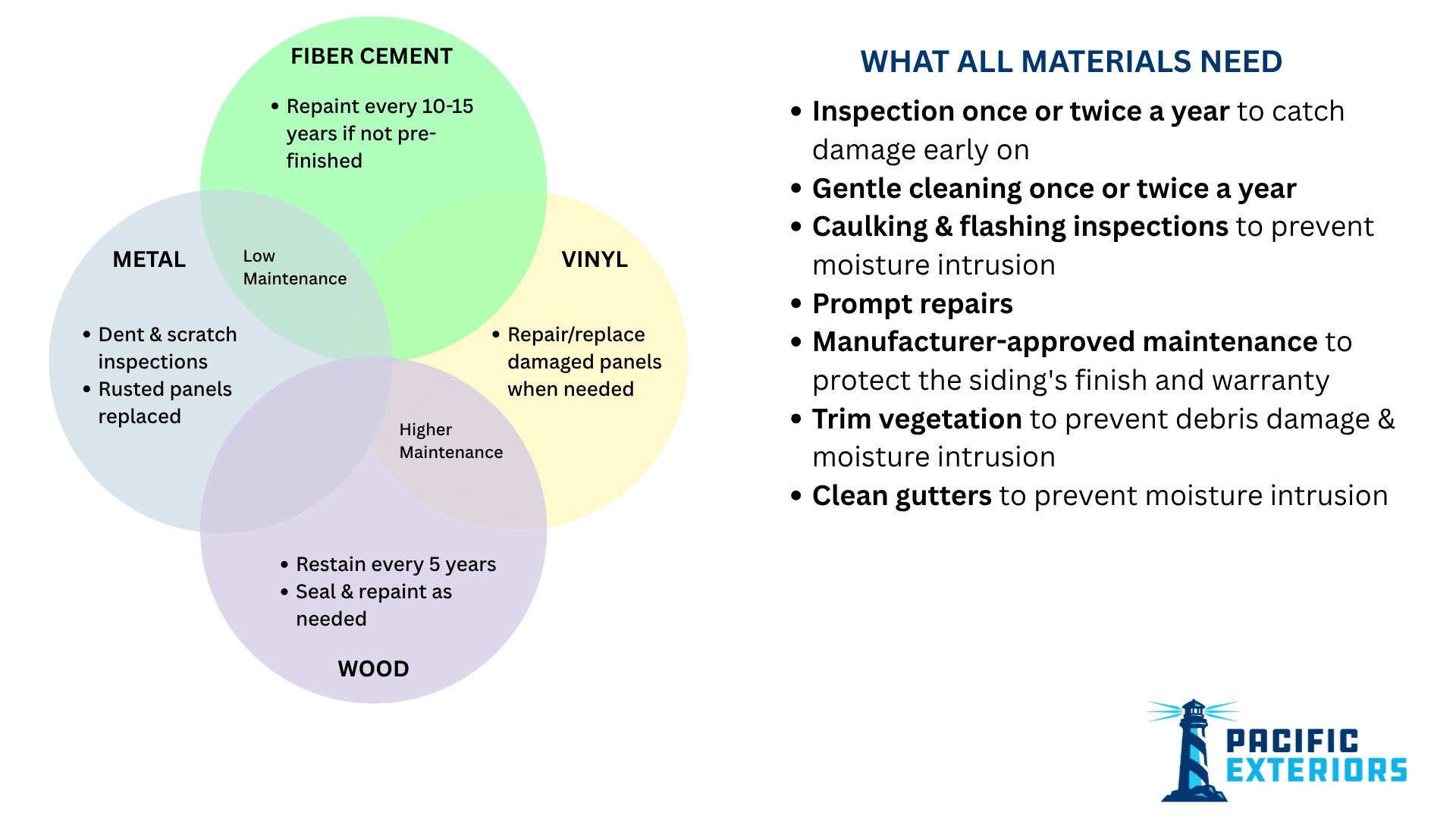
Which Siding Materials Require More Maintenance?
Maintenance needs vary by material, but every type of siding benefits from regular inspections and basic upkeep.
Wood: Requires the most maintenance. Inspect for peeling paint or stain, cracks, rot, moisture damage, and insect activity. Wood may also need periodic repainting, staining, or sealing.
Vinyl: Inspect for cracks, loose panels, warping, and storm damage. Due to UV exposure and storms, panels may need to be replaced prematurely. Regular cleaning can also help remove dirt and mildew buildup.
Fiber Cement: Maintain caulking when needed and check for cracked boards, chipped paint, and gaps around joints or trim. If panels aren’t pre-finished, then repainting may need to occur every 10-15 years.
Metal: Inspect for dents, scratches, loose panels, and damaged coatings that could lead to corrosion. Also, panels need to be reprimed when needed to prevent rusting, which affects the performance.
Even lower-maintenance materials should be cleaned regularly and checked for issues with caulking, flashing, drainage, and moisture.
Keep Records of Your Siding Maintenance

Keeping a record of your siding maintenance makes it easier to track your home's exterior, identify changes over time, and spot recurring problems. A simple maintenance log can help you determine whether an issue is isolated or requires further attention.
What Should You Keep?
Your maintenance records should include:
- Inspections: Routine and professional siding inspections
- Cleaning & maintenance: Cleaning, gutter maintenance, repainting, or staining
- Repairs & replacement: Dates, locations, and descriptions of completed work
- Documentation: Contractor invoices and records of major exterior projects
- Warranty information: Siding warranties and manufacturer maintenance requirements
Don't Forget Photos
Photos create a visual log of your siding's condition over time. Take pictures during inspections, before and after repairs, to document cracks, stains, damaged areas, or other changes. Comparing photos over the months or years can help reveal recurring or worsening damage that may not be obvious.
Why Keep These Records?
A documented maintenance history can also be valuable when selling your home. Records give potential buyers and inspectors evidence that the prior homeowner gave the exterior consistent care and provides useful information about previous repairs or replacements.
Frequently Asked Questions About Siding Maintenance
How often should I maintain my siding?
Homeowners should inspect their siding at least twice a year, particularly in the spring and fall. Clean the siding when it becomes visibly dirty and repair damage as soon as you discover it.
How often should siding be cleaned?
Siding generally should be cleaned once or twice a year or whenever it becomes visibly dirty. Homes in humid, shaded, or heavily vegetated environments may require more frequent attention.
Can I pressure wash my siding?
Pressure washing is generally not recommended for siding. Excessive pressure can crack panels, damage finishes, loosen siding, and force water behind the siding. Follow the manufacturer's cleaning instructions for your specific product.
What is the easiest way to clean siding?
A garden hose, mild cleaning solution, and soft-bristle brush, cloth, or sponge are generally safer choices than aggressive pressure washing. Always inspect the siding before cleaning and follow the manufacturer's care instructions.
How do I prevent mold and mildew on siding?
Address the source of moisture first. Keep vegetation trimmed, maintain gutters and downspouts, improve airflow around the siding, and investigate areas that remain consistently damp or repeatedly develop organic growth.
Which siding requires the least maintenance?
Fiber cement and metal siding are generally considered relatively low-maintenance materials. However, all siding requires periodic inspection, cleaning, and attention to caulking, flashing, drainage, and other components.
Does siding maintenance affect my warranty?
It can, depending on your manufacturer’s warranty terms. Improper cleaning, incorrect paint, unauthorized modifications, and failure to follow manufacturer requirements may affect warranty coverage. Always follow the care and maintenance requirements for your specific siding product.
When should I replace my siding instead of repairing it?
Replacement may make more sense when siding damage is extensive, widespread, repeatedly recurring, or associated with underlying moisture or structural problems. A professional siding contractor can evaluate the condition of the siding and underlying materials and help determine the appropriate solution.
Protecting Your Siding with Professional Help from Pacific Exteriors
Proper siding maintenance can help preserve your home's appearance, protect the wall assembly, and reduce the likelihood that minor exterior problems become expensive repairs.
But maintenance has limits.
If you’re seeing widespread and recurring damage that continues to happen despite regular upkeep, it may be time to have your home's exterior professionally inspected.
At Pacific Exteriors, we help homeowners identify siding problems and determine the appropriate next step, whether that means siding repair or replacement. Our team can evaluate your siding, identify potential issues, and help you understand the condition of your home's exterior before a small problem becomes a major one.
Don't wait until siding damage becomes structural.
Contact Pacific Exteriors today to schedule a free, professional siding inspection and find out what your home needs to stay protected.
Final Siding Maintenance Checklist
Before you finish your next siding inspection, ask yourself:
.jpeg?width=722&height=884&name=General%20Siding%20maintenance%20checklist%20(1).jpeg)
Link to download our general maintenance guide.
If you can answer "yes" to these questions, you're taking important steps toward protecting your home's siding, investment, and the structure behind it.
Need help evaluating your siding? Contact Pacific Exteriors to learn whether your home needs maintenance, repairs, or replacement.