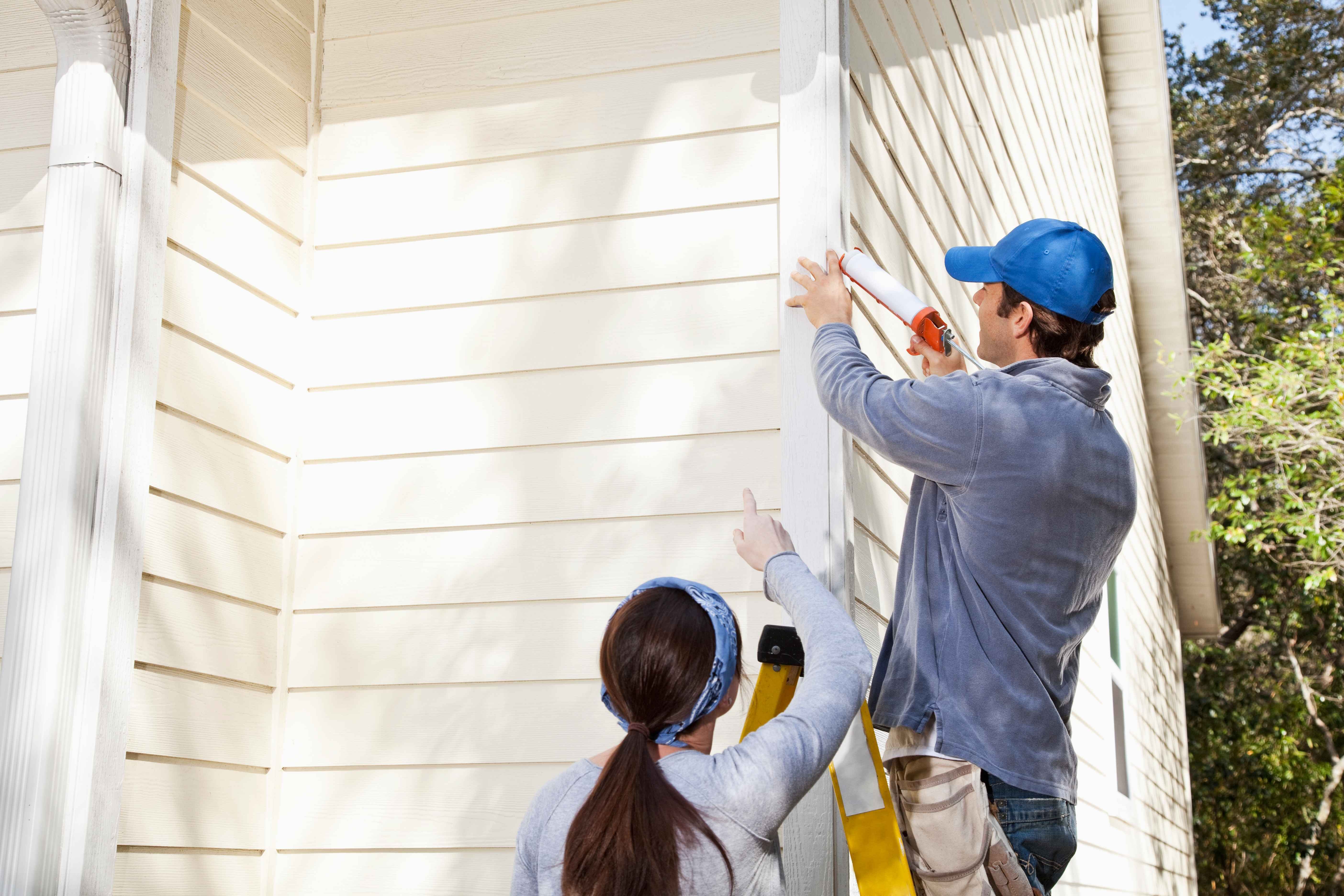



When you hire a contractor for a siding, roofing, or exterior renovation project, you expect recommendations to be based on what your home actually needs, not how much more you can spend.
While additional work or upgrades may sometimes be necessary, homeowners should understand why they’re being recommended and what alternatives are available.
With more than 15 years of experience serving homeowners, Pacific Exteriors understands the importance of honest recommendations, clear communication, and quality exterior work. Recommended repairs or upgrades should have a clear purpose, whether they address an existing problem, improve performance, or support proper installation.
In this guide, we'll explain the most common signs of contractor overselling and what homeowners can do to protect themselves.
At a Glance: 6 Signs a Contractor May Be Overselling You
Overselling can be harder to recognize when homeowners are unfamiliar with exterior work or unsure what their home needs. A trustworthy contractor should explain each recommendation and provide evidence when appropriate.
Watch for these warning signs when reviewing a contractor’s recommendations:
- They pressure you to sign immediately: You’re pushed to make a decision before reviewing your options.
- They recommend expensive upgrades without explaining why: Higher-cost products are presented without clear benefits or alternatives.
- They use fear instead of evidence: Serious claims are made without photos, inspection findings, or other supporting evidence.
- They keep finding “critical” work: Additional repairs or upgrades continue to expand the project without clear justification.
- Their estimate is vague: The scope, materials, or costs are unclear or difficult to compare.
- They recommend full replacement without considering repairs: Replacement is presented as the only option without explaining why repair is not appropriate.
What Is Contractor Overselling?
Contractor overselling occurs when a contractor pushes unnecessary repairs, upgrades, products, or services primarily to increase the project cost rather than address a legitimate need.
This is different from a professional recommendation. A contractor may recommend additional work when there is clear evidence that it is necessary.
For example:
- Legitimate recommendation: Rotted sheathing is discovered beneath existing siding and needs to be replaced before new siding is installed.
- Potential overselling: A contractor recommends replacing all siding when only a small area is damaged, without providing evidence that the rest has failed.
The difference comes down to evidence, explanation, and homeowner choice.
|
Helpful Recommendation |
Potential Overselling |
|
|
Primary focus |
Homeowner’s needs, goals, and budget |
Increasing the project cost to get more revenue |
|
Evidence |
Photos, inspection findings, or visible damage |
Vague warnings or unsupported claims |
|
Options |
Explains available choices and tradeoffs |
Presents one expensive option as the only solution |
|
Urgency |
Explains realistic risks and timelines |
Pressures you to make a quick decision |
|
Pricing |
Provides clear, written costs |
Uses vague or unclear pricing |
|
Scope |
Addresses the actual problem or damage |
Adds unrelated work without clear justification/reasoning |
6 Signs a Contractor May Be Overselling You
1. They Pressure You to Sign Immediately

One of the clearest red flags is a contractor pressuring you to make a decision before you’ve had time to review the estimate or compare your options.
Be cautious if a contractor says:
A same-day discount is not necessarily a red flag if the contractor clearly explains that it reflects savings from avoiding another sales visit or other legitimate costs. The concern is when a discount or limited availability is used primarily to pressure you into making a decision before you have time to review your options.
What to do
Ask how long you can safely take to consider the recommendation and whether waiting could affect your home. A trustworthy contractor should give you the information you need to make a decision without unnecessary pressure.
2. They Recommend Expensive Upgrades Without Showing Why You Need Them
A contractor may recommend premium siding, upgraded roofing accessories, new gutters, replacement windows, or other upgrades. A higher-priced option isn’t automatically an unnecessary upsell.
The important question is: What specific benefit does this upgrade provide for your home?
A more expensive product may be worthwhile if it addresses a specific need, improves durability or performance, or better fits your preferences and budget. Your home’s local climate and weather conditions may also affect which materials are appropriate.
However, homeowners should be cautious when a contractor insists that a premium product is necessary without explaining the difference between it and other suitable options.
What to do
Ask why the product is necessary, what problem it solves, and whether it’s required, recommended, or optional. Compare the alternatives and their expected benefits before deciding.
3. They Use Fear Instead of Evidence

Undoubtedly, fear can be a very effective sales tactic because homeowners obviously want to protect their homes and investment.
A contractor may exaggerate minor damage, normal aging, or isolated issues to make a problem seem more serious or widespread than it is.
Be cautious of dramatic claims about:
- Imminent roof failure
- Hidden water damage
- Structural problems
- Mold throughout the home
- Major code violations
Significant claims should be supported by evidence. A contractor should be able to show you what they found and explain why it requires immediate attention.
What to do
Ask the contractor to show you the evidence behind serious claims, such as photos, moisture readings, or inspection findings. For major repairs, consider getting a second opinion before agreeing to additional work.
4. They Keep Finding ‘Critical’ Work During the Project
A straightforward project can turn into a much larger one. You may request a siding estimate and suddenly be told you also need new gutters, trim, windows, doors, or other upgrades.
Indeed, additional work can be legitimate and needed for your home. Removing siding or roofing can reveal damage that was hidden during the initial inspection. However, every recommendation should have a clear reason and be supported by evidence.
For example, a window may need replacement if its surrounding framing is deteriorated and lets water inside the home.
|
Recommendation |
What to Ask |
|
Rotted trim |
Does the damage affect installation? |
|
New windows |
Is replacement necessary or optional? |
|
New gutters |
Are the existing gutters damaged or incompatible? |
|
How does this improve my roof and home? |
What to do
Ask whether the upgrades affect the durability and performance of your home or if they’re completely optional. Additionally, request evidence and see the potential damage in person in order to compare the costs and benefits before agreeing.
5. Their Estimate Is Vague or Difficult to Understand
Be cautious of vague terms such as “roof shingles” or “miscellaneous labor” without further explanation. Unclear estimates make it harder to understand exactly what you’re actually paying for.
For instance, an estimate might say “materials” but doesn’t specify each material used, their cost, manufacturer, color, etc.
A detailed estimate should outline the project scope, materials and their product details (color, style, etc.), labor, included costs, and potential additional charges. If unexpected work is discovered, the contractor should explain the issue and document the added work and cost before proceeding.
What to do
Ask the contractor to clarify anything unclear and make sure the full scope, materials, total cost, and change-order process (if applicable) are documented before signing.
6. They Claim You Need a Full Replacement Without Considering Repairs
Not every damaged roof, siding section, gutter system, or trim component requires complete replacement.
A contractor should evaluate whether the problem is:
- Localized damage that can potentially be repaired.
- Widespread deterioration that makes replacement more practical.
- A system issue affecting multiple parts of the exterior system that requires more than one component to be addressed (repaired or replaced).
For example, a single damaged section of siding does not automatically mean every wall needs replacement.
However, if an exterior system has widespread deterioration, hidden water damage, or is very old, replacement may be the more appropriate option.
What to Do
Ask whether the damage can be repaired and why replacement is the better option for your home when considering its long-term durability, protection, and value.
Necessary Repair vs. Recommended Improvement vs. Optional Upgrade
Not every recommendation belongs in the same category. Understanding the difference can make it much easier to identify legitimate contractor recommendations.
|
Type of Work |
What It Means |
Example |
|
Necessary repair |
Addresses a current problem, safety issue, or condition that prevents proper installation |
Replacing rotted sheathing exposed during siding removal |
|
Recommended improvement |
Improves durability or addresses an aging component that is still functioning |
Replacing a component approaching the end of its lifespan (50 year old vinyl siding) |
|
Optional upgrade |
Improves appearance, convenience, or personal preference |
Choosing a premium finish or aesthetic upgrade |
A trustworthy contractor should explain which category a recommendation falls into rather than presenting every possible improvement as something you must purchase.
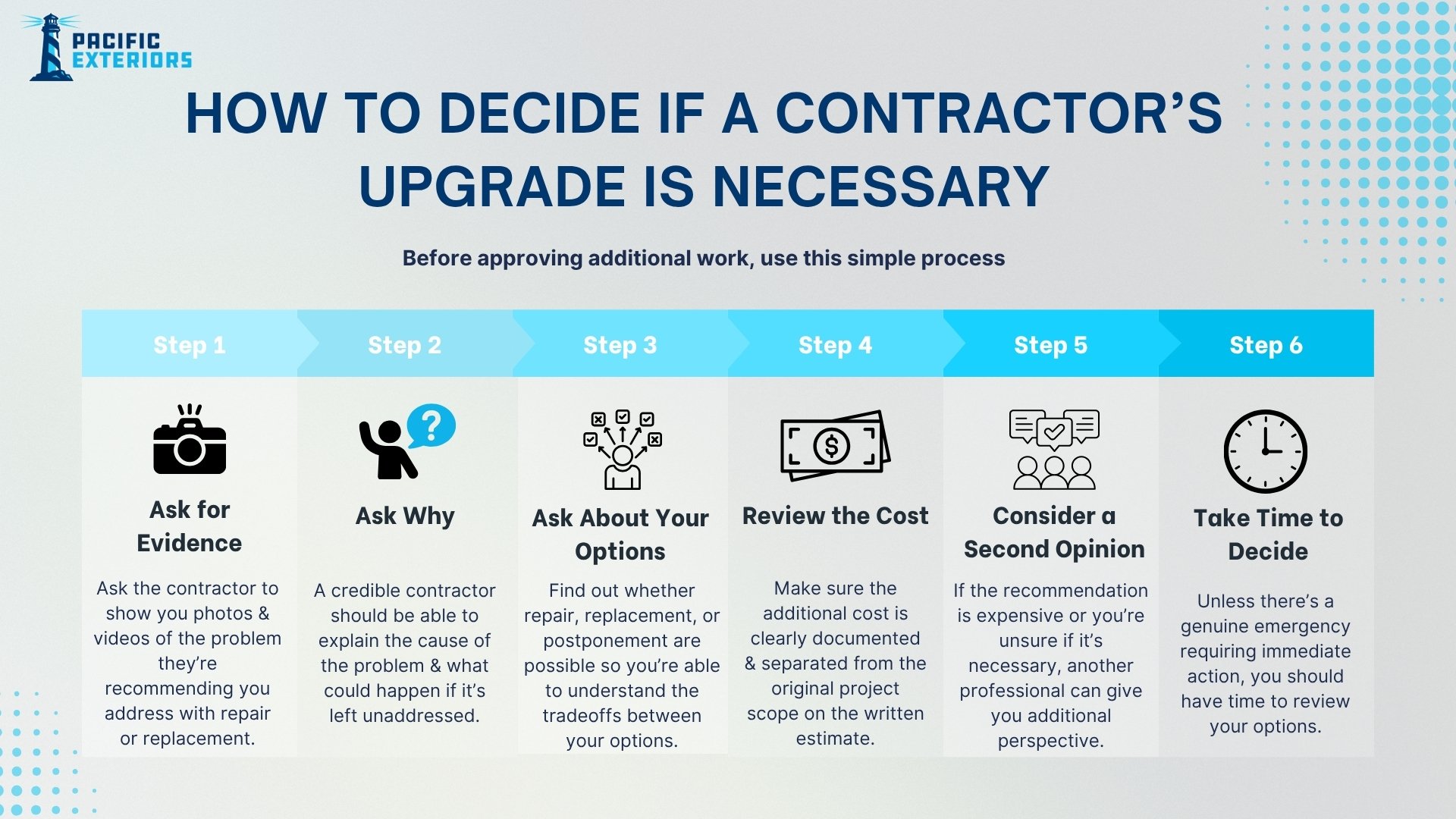
How to Decide if a Contractor’s Upgrade Is Necessary
What Should Homeowners Expect from an Honest Contractor?
A trustworthy contractor should make your project easier to understand, not harder. Homeowners should feel informed about the work being recommended, why it is needed, and what they are paying for.
You should expect:
- Clear explanations: The contractor should explain problems, recommend solutions, and why the work is necessary.
- Evidence for significant recommendations: Serious issues should be supported by photos, inspection findings, or other relevant evidence.
- Detailed estimates: The estimate should clearly outline the scope of work, materials, labor, costs, and change orders.
- Transparent pricing: You should understand what is included in the quoted price and what could result in additional costs.
- Necessary vs. optional work: The contractor should explain which work is required and which improvements are optional.
- Respect for your priorities: Recommendations should consider your goals, budget, and long-term plans rather than simply increasing the project size or price.
- No-pressure decisions: You should have time to understand your options and make a decision without being pressured.
A professional contractor should welcome reasonable questions and be willing to explain what they found, why they recommend a particular solution, and what alternatives are available. Understanding your project and its cost should be part of the process, not something you have to fight for.
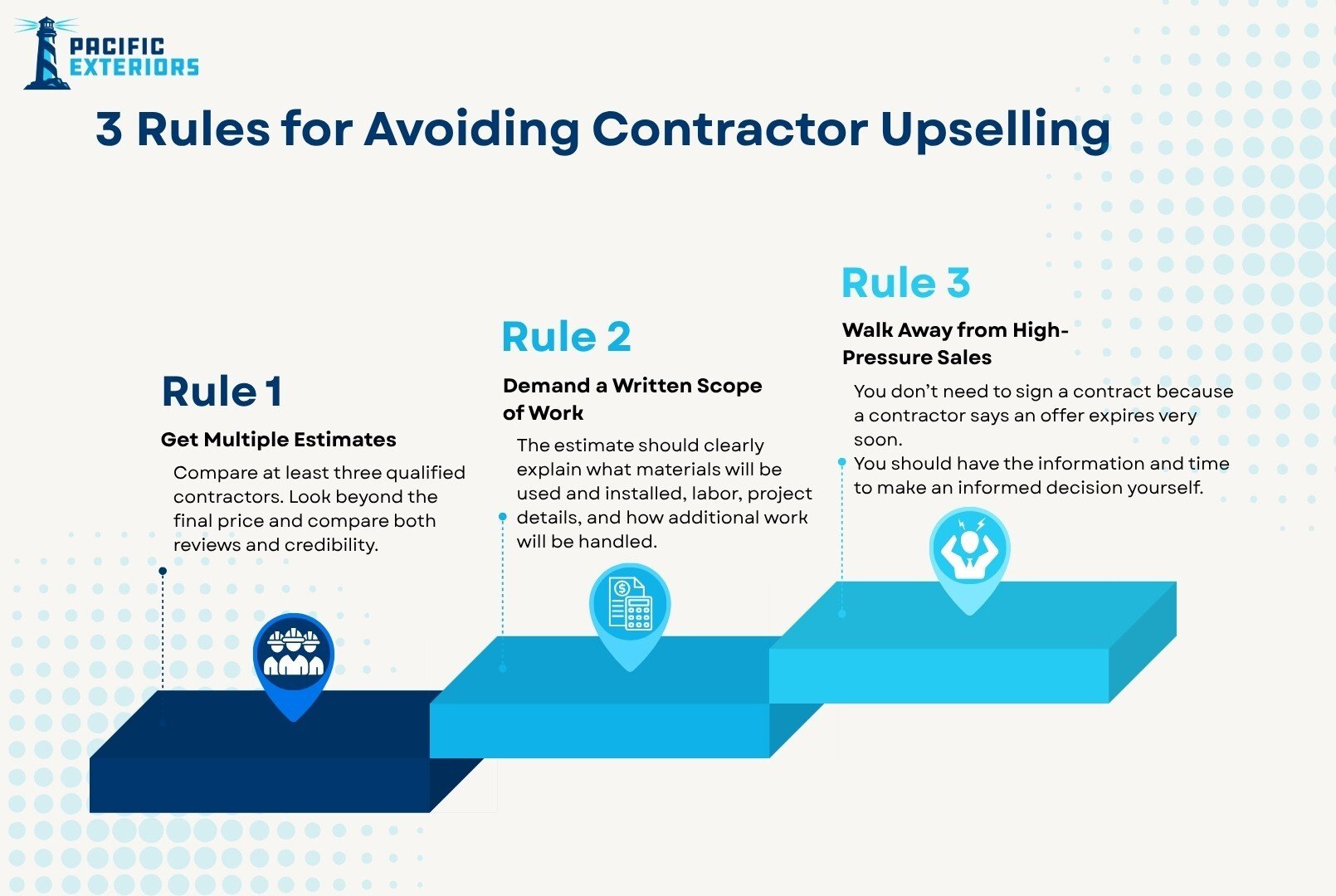
3 Rules for Avoiding Contractor Upselling
If you remember only three things from this article, remember these:
How Pacific Exteriors Approaches Recommendations

At Pacific Exteriors, we believe homeowners should understand the reasoning behind our costs and recommended upgrades and materials.
Our approach is to evaluate the condition of the home, listen to the homeowner's goals, and recommend solutions based on what will actually improve their home's exterior.
That means a recommendation may change depending on the property's condition, the homeowner's budget, the desired appearance, and long-term plans.
We also believe homeowners should have a choice. A durable or premium option may be worth considering when it provides a meaningful benefit, but homeowners should understand the difference between necessary work, recommended improvements, and optional upgrades before deciding.
Our estimates are valid for a full year and come with no obligation to sign, giving homeowners time to review the scope, compare options, and plan without pressure.
Ready to Discuss Your Exterior Renovation?
Not Ready for an Estimate Yet?
Frequently Asked Questions About Contractor Overselling
How can I tell if a contractor is overselling me?
A contractor may be overselling you if they pressure you to make an immediate decision, recommend expensive upgrades without explaining their benefits, use fear instead of evidence, or continue adding unnecessary work to the project. Ask for clear explanations, supporting evidence, and alternatives before agreeing to additional work.
Is recommending additional work always considered overselling?
No. Additional work can be necessary when a contractor discovers hidden damage, deteriorated materials, or installation issues. The key difference is whether the recommendation is supported by evidence and clearly explained. A trustworthy contractor should also distinguish between necessary repairs, recommended improvements, and optional upgrades.
What should I ask a contractor before agreeing to an upgrade?
Ask why the upgrade is recommended, what problem it solves, whether it is required or optional, and what alternatives are available. You should also ask how the upgrade affects the project's total cost, durability, performance, or appearance.
Should a contractor provide evidence of damage?
For significant repairs or replacement recommendations, you should expect the contractor to explain what they found and, when practical, provide supporting evidence such as photos, inspection findings, or moisture readings. This can help you understand whether the recommended work addresses an actual problem.
Is it a red flag if a contractor pressures me to sign right away?
Yes. While legitimate scheduling constraints or limited-time promotions can exist, you should be given reasonable time to review the estimate and understand your options. Be cautious if a contractor uses high-pressure tactics or claims you must sign immediately to receive a certain price.
Should a contractor offer repair and replacement options?
When both are technically appropriate, a contractor should explain whether the problem can be repaired and why replacement may provide greater long-term value. However, some conditions may make replacement the more appropriate solution, such as widespread deterioration or damage that affects the larger exterior system.
What should a detailed contractor estimate include?
A detailed estimate should clearly identify the scope of work, materials and product details, labor, total cost, included services, and potential additional charges. If unexpected damage is discovered, the contractor should explain the issue and document any changes to the project and cost before proceeding.
How can I avoid being pressured into unnecessary contractor upgrades?
Get multiple estimates, ask contractors to explain the reason behind significant recommendations, request evidence of major problems, compare alternatives, and make sure the scope and pricing are documented in writing. Most importantly, don't feel obligated to approve work you don't understand.